
By Johan Söng
Reflections, AI Urgency, and a Dash of Reality Check
Dreamforce 2025: Day III
After three whirlwind days at Dreamforce 2025, the duty of recapping the final day has fallen to me. Why? Let's be honest, because I was the one who consumed the least amount of beer during Dreamfest. While my younger, more resilient colleagues were rocking out to Metallica, I made a strategic retreat to bed. Trying to cover all three days of a massive number of sessions would require a non-human level of focus. But wait... we actually have AI co-authors for that now, don't we?
Thursday began, as it had all week, unnaturally early. Thanks to the time difference, I found myself wide awake at 4 AM. Rather than fight it, I embraced the moment, taking a refreshing walk to enjoy the golden hour view of Fisherman's Wharf. The quiet streets of San Francisco were a stark contrast to the buzzing, caffeinated chaos of the Moscone Center, and a perfect moment of clarity before the final plunge.
 (Golden Hour in San Francisco - Taken near the Golden Gate Promenade at 7AM)
Day three sessions, so little time (and even less energy). If there's one thing you learn quickly at Dreamforce, it's that attending everything is not only impossible - it's not even desirable.
My personal lesson from this year? Triage aggressively. I learned to prioritize just two or three key sessions per day and, crucially, to give myself permission for a bit of silence and a slower tempo in between. Think of it as a strategic retreat to recharge. Dreamforce is a marathon of inspiration, but even inspiration needs a coffee break or two.
AI: No Longer the Future, It's the Furniture
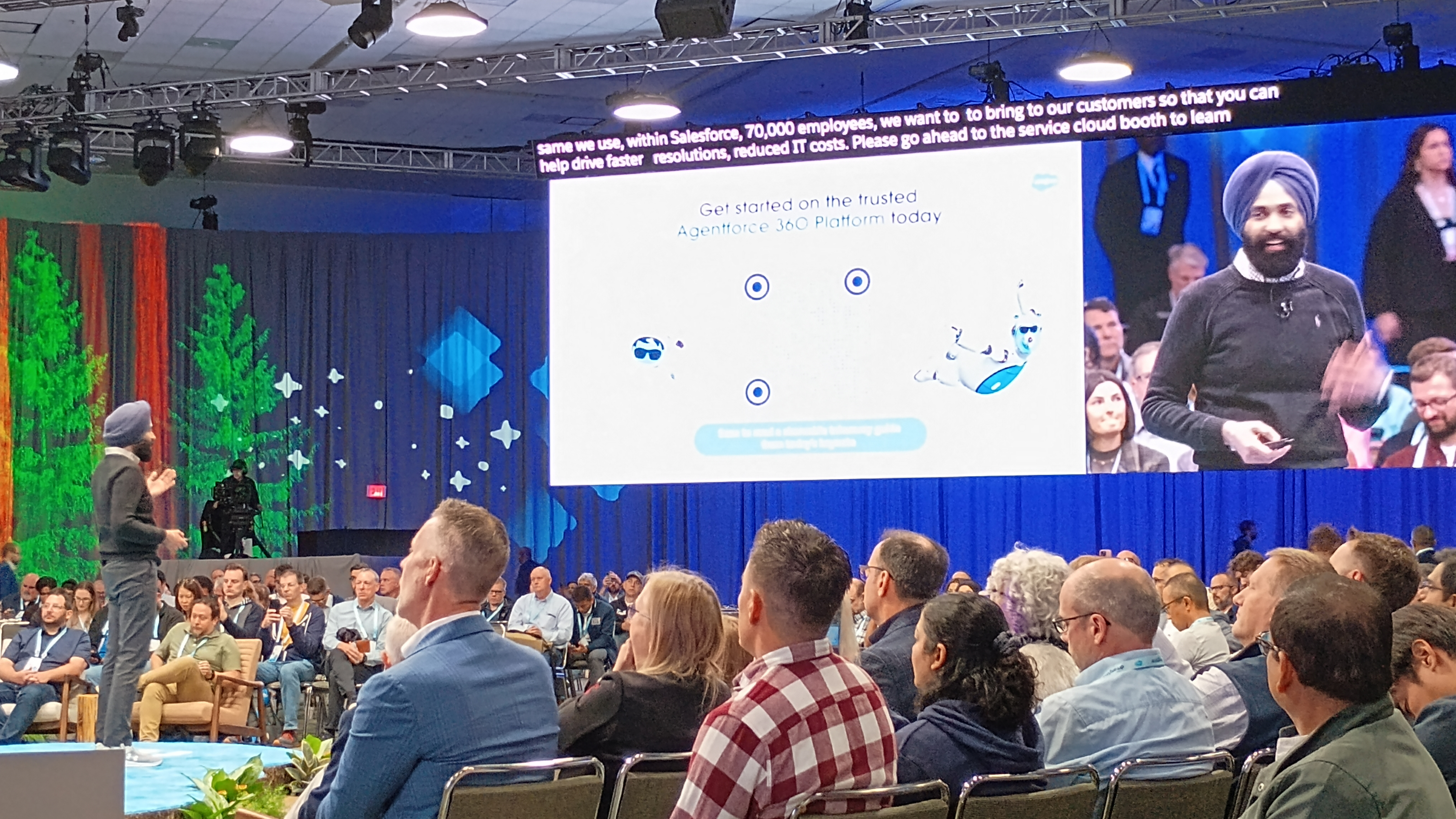 (Key Session - Build and Govern the Agentic Enterprise, Khush Singh on scene)
What truly stood out this year was the tangible, almost frantic, urgency around Artificial Intelligence. AI wasn't a futuristic concept discussed in niche sessions; it was the main stage, the hallway conversation, and the closing slide of nearly every presentation.
Salesforce seems to have reached a new level of maturity with its Agentforce platform. They're no longer just building products; they're architecting an entire ecosystem for Agent implementation, complete with supporting tools for testing, test data generation, validation, and analytics. It’s a comprehensive, end-to-end vision for how businesses will deploy and manage AI agents.
What's both fascinating and a bit unsettling is how the traditional boundaries between "domains" are dissolving in real-time. Every major player in IT now sees itself as an AI company. The lines are blurring so fast that yesterday's non-competitor in a completely different industry might just become tomorrow's biggest rival. The game board is being redrawn, and everyone is scrambling for a position.
A Ride Into the Future (Literally), Courtesy of Waymo
Talk is cheap, but a ride in a fully autonomous car? That’s an experience. During the highlight fireside chat of the day, Marc Benioff urged everyone to try out Waymo's autonomous driving service. So, my colleagues at Deploy Consulting and I complied. We hailed a car with no driver and set off into the streets of San Francisco.
It was surreal. The car navigated complex intersections, yielded to pedestrians, and merged into traffic with a calm precision that was both awe-inspiring and slightly unnerving. This wasn't a demo on a closed track; this was real-world AI in action. Waymo, an AI application from Google, is a perfect example of the industry disruption we were hearing about all week. It's not just competing with traditional taxi businesses; it's challenging Uber, putting pressure on Tesla's Autopilot, and even forcing legacy automotive makers to rethink their entire future.
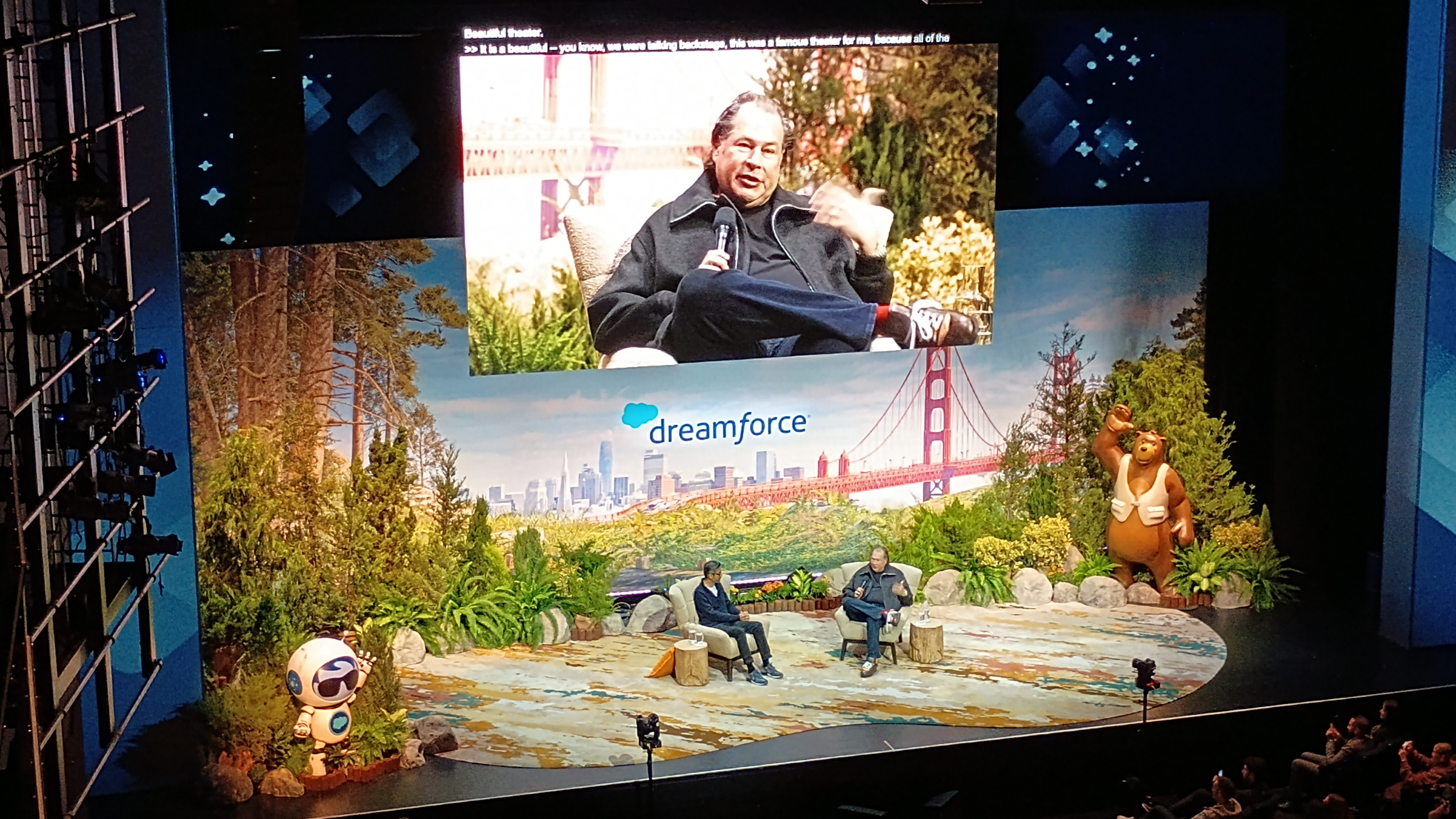 (Picture above: The Billion-Dollar Question: A Fireside Chat with Giants)
Session: A Conversation with Sundar Pichai and Marc Benioff
The absolute highlight of the day for me was the fireside chat between Google's Sundar Pichai and Salesforce's Marc Benioff. Sundar's natural charm aside, the discussion was a fascinating window into the strategic high-stakes game being played at the top of the tech world.
It's clear that the race is no longer just about who has the best algorithms or the slickest platform. The real battle is for control of the entire AI ecosystem—from the custom silicon chips and massive data centers all the way down to the power supply needed to run them. This is a war of infrastructure, and the capital investment required is staggering.
But this led to the elephant in the room, a question that hung in the air: what is the business case? How sustainable is this AI boom when many foundational services are still priced far below their real operational cost? It feels like the entire industry is in a mad dash to achieve scale first, with a vague hope that profitability will... eventually... follow.
Salesforce Tower - Ohana Floor
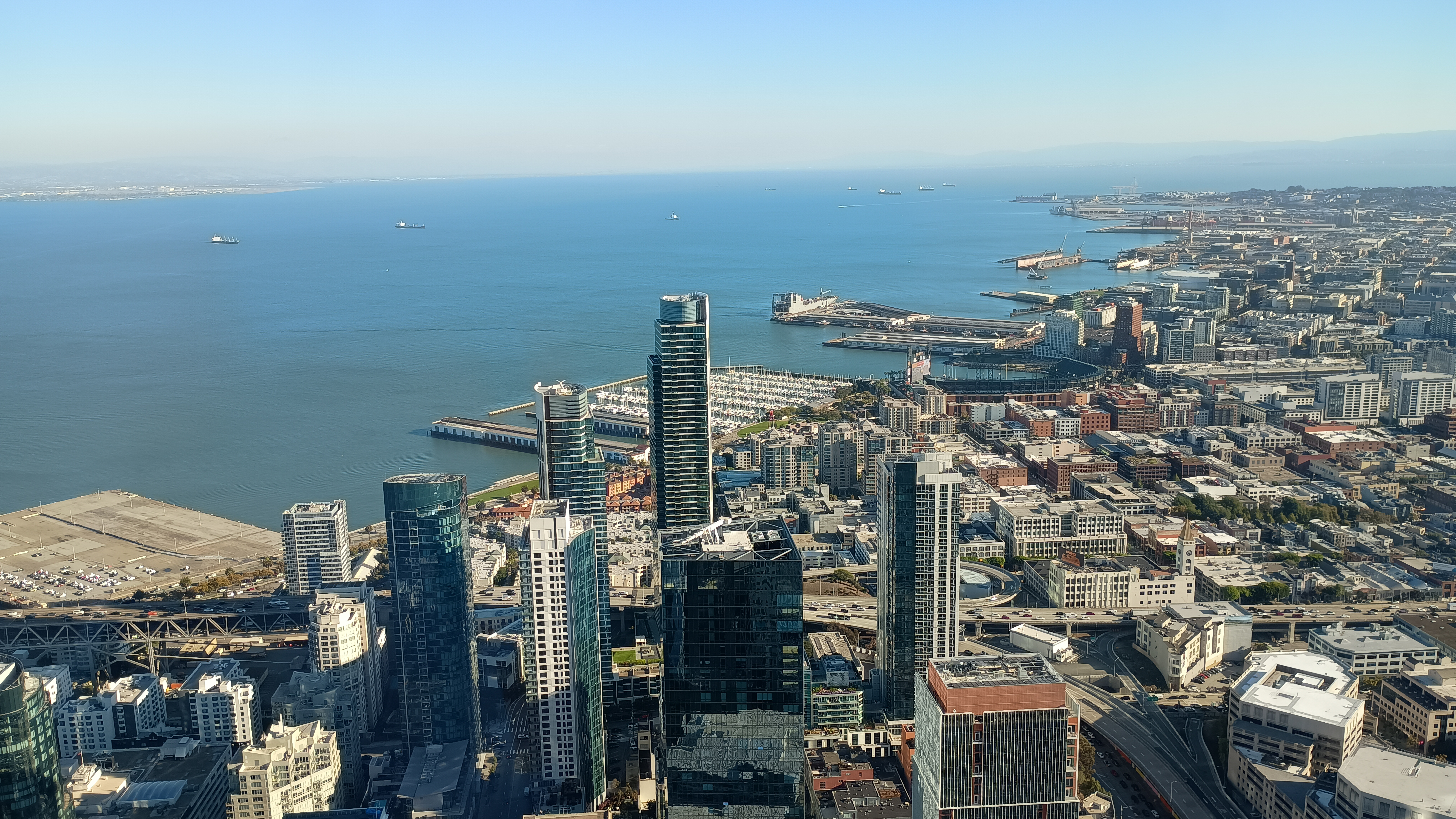 For our last day company event, we went on a tour of the legendary Salesforce Tower Ohana Floor. Stepping inside felt like entering a surreal sci-fi world - the corridor to the entrance was so gleaming white it was like walking straight into The Matrix scene. The view from the top? Absolutely breathtaking, think Eiffel Tower vibes, only higher, shinier, and with way better Wi-Fi.
A massive thank-you to our wonderful host and dear ex-colleague, Emelie Garrison, who turned our last day into one of those “can we do this again?” moments.
AI Revolution or Dot-Com Bubble 2.0? A Sense of Déjà Vu
As I head back from San Francisco, my mind is buzzing with more questions than answers. The rapid implementation of AI agents across countless platforms and systems, each with varying strategies, raises a critical question: how will companies manage and orchestrate these complex, end-to-end process workflows when only looking at limited process steps that have been “automated” leveraging AI? Perhaps Salesforce's recent acquisition of process mining company Apromore is the first strategic move in that direction in order to address end-to-end process leveraging AI?
And then there's the big one, the question that gives me a chilling sense of déjà vu.
Are we still in the early innings of the AI revolution, or are we already living through a modern version of the dot-com bubble? Having been there for the euphoric rise and spectacular crash of 1999–2000, the current atmosphere feels eerily familiar.
Either way, one thing is certain: Dreamforce 2025 was a powerful, visceral reminder that the future isn't waiting for an invitation. It's being built right now; fast, loud, and occasionally, overwhelmingly so.
What's Your Take?
I'm left wondering where you stand. Do you see the current AI explosion as the dawn of a true, sustainable revolution, or are you, like me, getting flashbacks to the dot-com era? Is the "scale first, profit later" model a winning strategy or a recipe for a bubble?